About Me
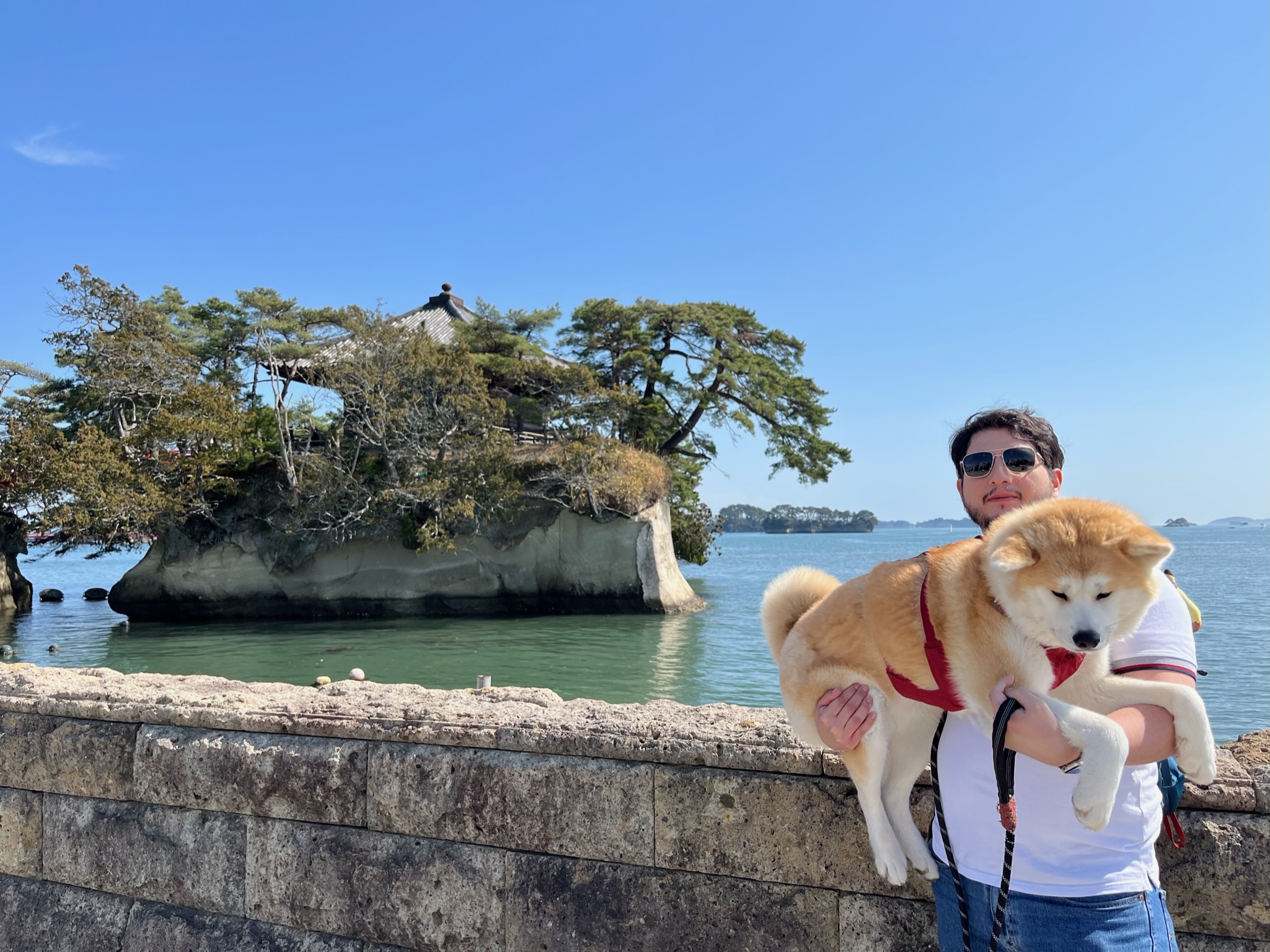
Hi, I am Leonardo (Leo) Stari
I am currently a Specially Appointed Research Fellow at Tohoku University, conducting research in the Mei Lab (Graduate School of Environmental Studies). My work bridges experimental microbiology and computational modeling, focusing on the bioremediation of water and air pollutants, as well as predictive microbial ecology. By combining wet-lab isolation of novel degraders with next-generation AI architectures, I aim to transform how we understand and utilize microbial communities for environmental restoration.
Originally from Santiago, Chile, I moved to Sendai, Japan, in 2016. I hold a PhD in Environmental Chemistry and possess a diverse professional background that spans from IT project engineering to high-performance computing and wet-lab research.
Outside of the lab, I enjoy walking, swimming, and reading novels and manga. I am also an avid gamer, enjoying titles like World of Warcraft and Pokémon.
Career Timeline
Bioremediation of chlorinated methanes
Seishin, Renewable Energies Lab. (2006-2009) | Intro. Japanese course & assistant teacher (2007-2009) | Summer school teacher | Thesis in biofuels
Bachelor degree, thesis in bioethics
Skills & Languages
🌐 Languages
- 🇪🇸 Spanish (Native)
- 🇬🇧 English (Advanced)
- 🇯🇵 Japanese (Advanced)
- 🇫🇷 French (Intermediate)
🧪 Wet Lab Techniques
- Microbial Isolation & Enrichment Cultures
- Bioreactor Design & Scale-up
- ICP-MS Quantitative Analysis
- Plant Physiology & Field Work
💻 Dry Lab & Computational Techniques
- Deep Learning & AI (LSTM, JEPA, xLSTM)
- Metagenomics & Bioinformatics Pipelines (HPC)
- Illumina & Nanopore Sequencing Analysis
- Python, MATLAB & Java Scripting
Research Interests
My academic path is driven by a goal to elucidate and harness microbial processes for environmental benefit. My work combines wet-lab experimentation with data-driven modeling.
Bioremediation of Water & Air Pollutants
I focus on harnessing microbial processes to degrade persistent organic pollutants and heavy metals from contaminated water and air. My work spans the isolation of novel degraders, functional genomics, and bioreactor-scale bioaugmentation strategies. Key examples include the isolation of Pseudomonas sp. Stari2 for aerobic carbon tetrachloride degradation, and current efforts targeting selenate-reducing consortia for mine wastewater treatment.
Microbial Ecology & Predictive AI
To bridge the gap between isolate characterization and ecosystem function, I study how microbial communities assemble and respond to environmental shifts. Leveraging functional shotgun metagenomics and high-resolution time-series data, I apply next-generation AI architectures (LSTM, JEPA, xLSTM) to transform microbial ecology into a predictive science.
Latest Publication
Carbon Source Acts as a Deterministic Filter Shaping Microbial Succession and Rare-Abundant Decoupling in Soil Bacterial Communities
ISME Communications | Published: April 20, 2026 | DOI: 10.1093/ismeco/ycag108
Research Metrics
Metrics based on Scopus / Google Scholar data. Updated via Python script.
Current Projects
🧪 Biological Selenium Removal from Mine Wastewater
Targeting the underexplored selenate (Se⁶⁺) reduction pathway, this project isolates and characterizes selenate-reducing bacterial consortia from selenium-affected mine wastewater. The approach combines strain isolation with bioaugmentation strategies, aiming to achieve selenium concentrations below 10 ppb in treated effluent through lab-scale and pilot reactor testing.
🤖 AI-Driven Prediction of Bacterial Communities
Leveraging functional shotgun metagenomic data and high-resolution time-series sequencing, this project applies next-generation AI architectures (LSTM, JEPA, xLSTM) to predict microbial community dynamics and succession patterns. The goal is to transform microbial ecology from an observation-heavy field into a highly predictive science.
💨 Bioremediation of Contaminated Air
Investigating microbial degradation of volatile organic compounds (VOCs) and persistent gaseous pollutants. Building on previous work with carbon tetrachloride, this project explores biofilter and bioreactor systems for treating industrial and environmental air emissions.
Publications
- Loading publications from ORCID...
Selected Talks & Presentations
🎤 Conference Oral Presentations
-
Deep Neural Networks for Predicting OTU Dynamics in Soil Bacterial Communities
-
Deterministic Shaping of Soil Bacterial Communities: Interplay of Rare Species and Environmental Selection
-
The Succession of Taxonomic Structure and Metagenome Composition of Bacterial Community Cultured with Different Carbon Sources
-
Assessment of a Carbon Tetrachloride Degrading Consortia under Anaerobic Conditions
🖼️ Conference Poster Presentations
-
Assessment of Carbon Tetrachloride Degrading Consortia under Anaerobic Conditions
Contact
📍 〒980-8579 宮城県仙台市青葉区荒巻字青葉6-6-20
東北大学大学院 環境科学研究科研究棟 4F (Mei Lab)